

For thousands of years, humans have wanted to be remembered. We built monuments and wrote poems. Now, we use our digital footprint to leave a mark.
Every post, email, and voice note we make is a permanent record of our lives. This data is the base for the digital afterlife. It makes our legacy accessible to virtually everyone.
This change challenges old ways. Instead of just a headstone, we might have interactive digital beings. These raise big questions about memory, legacy, and being remembered today.
The same theme also appears in ai ghosts understanding digital entities, where the idea takes on a different angle.
The Digital Footprint: A Foundation for Immortality
Every second, we all create 1.7 megabytes of data. This forms a permanent digital tapestry. It’s not just information; it’s the core of our online lives.
Social media stores our thoughts, relationships, and reactions. Emails and messaging apps capture the details of our conversations. These logs are rich with our interactions.
Our financial habits and consumer identities are recorded in transactional data. Photos, videos, and voice recordings add sensory depth. Together, they paint a detailed picture of us.
Cloud services act as a vast library for our data. They store and sync our information across the globe. This ensures our records last long after any device fails.
“We are shifting from remembering lives to technically sustaining them. The cloud is the new cemetery, and data is the new epitaph.”
Advanced algorithms then sort through this data. They find patterns, infer preferences, and link different pieces of information. This makes our digital identity clear and lasting.
The aim is to achieve “data immortality”. It’s about keeping a digital presence alive long after we are gone. This is not just about keeping memories; it’s about creating a living, data-driven entity.
Our digital legacy is the key to this. It’s the foundation for ideas like AI ghosts. Without it, creating a believable digital afterlife is hard.
Our online lives are now permanent and curated. They’re set up for a future where our digital selves can continue. This turns immortality into a real, data-based project.
Defining AI Ghosts: Beyond Science Fiction
AI ghosts are not just myths. They are real, based on data and software. They keep a person’s digital life alive after they pass away. This isn’t about ghosts but about advanced technology.
AI ghosts use artificial intelligence to learn about a person’s online life. They mimic how they talked, made decisions, and acted. This creates a digital memory that feels real.
The aim is to make a living memorial. This digital being can keep a connection alive. It’s more than just old photos and stories.
From Static Memorials to Interactive Entities
The technology has grown in three stages. First, there were simple digital memorials from the 1990s to the 2000s. These were just web pages with photos and stories.
Then, from 2010 to 2018, we saw more interactive sites. These allowed people to share videos and letters. The deceased’s story became more alive, but it was always started by others.
Now, from 2019 on, AI is at the heart of these memorials. Conversational AI makes these digital beings interactive. They can talk, tell stories, and offer comfort in a familiar voice.
This change makes the memorial seem alive. It becomes part of the grieving process.
To make a digital echo feel real, certain data is needed. Each piece helps in different ways. The more data, the more real the AI ghost feels.
The main data types include:
- Social Profile Data: Emails, social media, and messages. This teaches the AI how to communicate like the person.
- Behavioural Records: Choices, preferences, and routines. This could be what they bought, listened to, or did. It helps the AI make decisions like they would.
- Personal Content: Diaries, blogs, and creative writing. This helps the AI understand the person’s thoughts, values, and voice.
- Multimedia Assets: Photos, videos, and voice memos. These are key for the AI to “speak” or “appear.”
The table below shows how these data types help the AI ghost:
| Data Type | Primary Source Examples | Contributes to Replication of: |
|---|---|---|
| Social Profile | X (Twitter), Facebook, text messages | Conversational style, humour, frequently used phrases |
| Behavioural | Streaming history, online purchases, calendar entries | Preferences, habits, and probable choices in new scenarios |
| Personal Content | Private journals, published articles, letters | Depth of thought, moral compass, and complex narrative |
| Multimedia | Family videos, voice notes, photo albums | Audiovisual presence and vocal tonality |
Together, these parts make the conversational AI at the heart of the AI ghost. It’s not alive but a complex model of a person’s life. This model allows for ongoing digital interactions, changing how we remember people.
The Technology Behind the Veil: How AI Ghosts Are Created
Creating an AI ghost is a complex task. It starts with collecting data and ends with a digital entity that can interact. This journey transforms digital bits into a living, breathing being.
Data Harvesting and Curation: Building the Digital Soul
The first step is gathering a person’s digital footprint. This means collecting lots of personal data from different places. The aim is to build a detailed profile that acts as the AI’s ‘digital soul’.
Data comes from social media, emails, texts, and digital journals. Voice recordings from videos and podcasts are also key. Even the metadata, like when and how often someone communicated, is important.
After gathering data, it needs to be cleaned and organised. AI engineers sort it out so machine learning algorithms can understand it. This makes a digital identity ready for the next step.
| Data Type | Primary Sources | Use in AI Ghost Construction |
|---|---|---|
| Textual Content | Social media, blogs, emails | Models writing style, opinions, and knowledge base |
| Audio & Voice Recordings | Voicemails, videos, interviews | Trains speech synthesis for authentic voice replication |
| Visual Media | Photographs, video footage | Informs avatar creation and contextual memory references |
| Behavioural Metadata | App usage, location history | Reveals habits, routines, and preferences for realistic interaction |
With the data ready, the AI modelling starts. This uses advanced machine learning to mimic the person’s personality and communication style. Neural networks look at the data to find patterns in decision-making and emotions.
Predictive modelling is key here. The AI doesn’t just repeat what it’s been told. It learns how the person might react in new situations. This makes conversations feel real and spontaneous.
Natural Language Processing (NLP) is vital for speech replication. It breaks down the person’s speech patterns, slang, and sentence structure. This allows the AI to generate new text or speech that sounds like the original person.
The outcome is a system that can have conversations that reflect the person’s views. It does this by combining recall and predictive modelling. This technology creates a digital persona from many data points.
Current Manifestations: From Chatbots to Deepfakes
The idea of AI ghosts has turned into many real uses, like chatbots and deepfakes. These uses are split into good and bad. Knowing the difference is key for those exploring digital afterlives.
Service-Based Platforms: HereAfter AI and StoryFile
Companies now help people create a posthumous AI presence with their consent. These services keep life stories alive and allow for future chats. They are the most common and ethical way to handle digital legacies.
HereAfter AI lets users record stories and answers. It creates a “Life Story Avatar” for loved ones to ask questions. StoryFile makes video interviews interactive with AI. Re;memory in Japan builds digital personas from personal data for remembrance.
Project December is more experimental. It makes “generative ghosts” – AI chatbots from personal texts and emails. These chatbots can have new, unscripted conversations. This shows a future where digital echoes can grow and change.
The table below compares key features of these leading service-based platforms:
| Platform | Primary Medium | Key Feature | Consent Model |
|---|---|---|---|
| HereAfter AI | Audio & Chat | Life Story Avatar for Q&A | Explicit user participation required |
| StoryFile | Interactive Video | Conversational video responses | Subject records content knowingly |
| Re;memory | Digital Persona | Data synthesis for personality simulation | Often initiated by family posthumously |
| Project December | Generative Chatbot | AI trained on personal correspondence | Can be set up by user or third party |
The Ominous Side: Grief Fraud and Malicious Deepfakes
On the other hand, there are dark uses of this tech. Grief fraud scams target the bereaved, promising digital replicas for a fee. They then vanish with the money and personal data.
Malicious deepfakes are another threat. Without consent, someone’s likeness and voice can be used to create fake AI ghost replicas. These can be used to manipulate emotions, defame, or spread false information.
Experts also talk about digital kidnapping and ransomware. A hacked posthumous AI model could be held for ransom. This would be a huge violation of digital dignity and memory.
The mix of grief and AI tools is a recipe for exploitation. The vulnerable are being targeted as a new way to attack.
These bad uses show we need to talk about consent, data ownership, and security. The tech itself is neutral, but how we use it can either honour or harm memories.
Psychological Impacts: Grief, Closure, and Unhealthy Attachment
Grief technology powered by AI has a big impact on our mental health. It changes how we mourn and remember loved ones through digital means.
This technology is not always good or bad. It can bring comfort to some, but also complicate the grieving process for others.
Therapeutic Uses and the Continuation of Bonds
AI ghosts are seen as helpful by some. They offer comfort and a perceived presence. This can ease the pain of loss, acting as a transitional object.
These digital beings help with healing acts. They allow for unfinished conversations and goodbyes. This can help people find closure.
This matches the “continuing bonds” model in psychology. It says keeping a bond with the deceased is healthy. An AI ghost can be a way to do this.
Complications for the Grieving Process
But, experts warn of risks. Constant use can block the natural grieving process. It might lead to delayed or arrested grief.
There’s also a risk of unhealthy attachment. Users might prefer the digital echo to real-life grieving. This can stop them from moving on.
AI ghosts, made from data, can also distort memories. They might create an idealised version of the deceased. This can confuse real memories with the simulation.
Experts are sceptical of claims to “get rid of grief.” Grief is a process to be endured, not solved. Technology that tries to bypass this might prolong suffering.
| Aspect | Potential Therapeutic Benefit | Key Psychological Risk |
|---|---|---|
| Emotional Connection | Provides comfort and a sense of continued presence, reducing feelings of abrupt isolation. | Can foster an unhealthy dependency, hindering emotional autonomy and new real-world connections. |
| Grief Processing | May facilitate specific closure activities (e.g., unfinished talks), aiding in narrative healing. | Risks delaying the acceptance of loss, arresting the individual in a stage of denial or bargaining. |
| Memory & Legacy | Offers a dynamic, interactive repository for stories and personality traits. | May promote an idealised or simplified version of the deceased, distorting authentic memory. |
The value of grief technology varies by person. It depends on their mental state, the loss they’ve experienced, and how they use it. It’s a new factor in the ancient process of grief.
Ethical and Philosophical Quandaries
The creation of digital afterlife technologies sparks deep debate about being human. Making an AI ghost is more than just data science. It makes us question autonomy, privacy, and personal identity. The field of AI ethics helps us navigate these complex issues, balancing technology with moral values.
These debates touch on grief, memory, and legacy. Companies have a big role in how we remember people. They must follow strict ethical rules to avoid harm and set good examples.
Consent and Posthumous Autonomy
Consent is key in creating AI ghosts. Can someone really agree to a digital version of themselves after they’re gone? Today’s consent models struggle with this idea. The simplest way is for someone to say yes before they die, in a legal document or digital will.
But, this method has its problems. A person’s wishes might change, or technology could evolve beyond what they expected. Other methods, like assuming consent from a person’s online habits or their family, are even more tricky. They could create a digital version that the person never wanted.
The idea of ‘posthumous autonomy’—the idea that a deceased person can control their digital form—is a legal concept trying to become an ethical reality.
The table below shows the main consent models and their ethical challenges:
| Consent Model | Description | Key Ethical Challenge | Practical Example |
|---|---|---|---|
| Explicit Pre-Mortem Authorisation | Direct, documented permission given by the individual before death. | Inability to revoke or amend consent after death; possible coercion. | A detailed clause in a digital will specifying data use for an AI ghost. |
| Proxy Consent by Kin | Permission granted by family members or executors after death. | Conflict between family’s desire for comfort and the deceased’s unknown wishes. | A child commissioning an AI ghost of a parent from their social media data. |
| Implied/Assumed Consent | Inference based on the person’s lifetime behaviour and data sharing. | Highly speculative; violates the principle of informed, specific consent. | A platform using publicly posted videos and texts to create a memorial bot. |
| Absent Consent | No consent sought or available; creation based on available data. | The most significant violation of privacy and autonomy; potentially illegal. | Posthumous deepfake creation for commercial or entertainment purposes. |
The Identity Problem: Is It Really “Them”?
Even with consent, a deeper question remains: the identity problem. An AI ghost is a simulation made from data. It can talk and remember things, but it’s not conscious like a living person.
This raises a big question: is the AI ghost a continuation of the person or just a facsimile? Philosophers say personal identity is about continuous, conscious experience. A data model, no matter how detailed, is just a snapshot, not a living being.
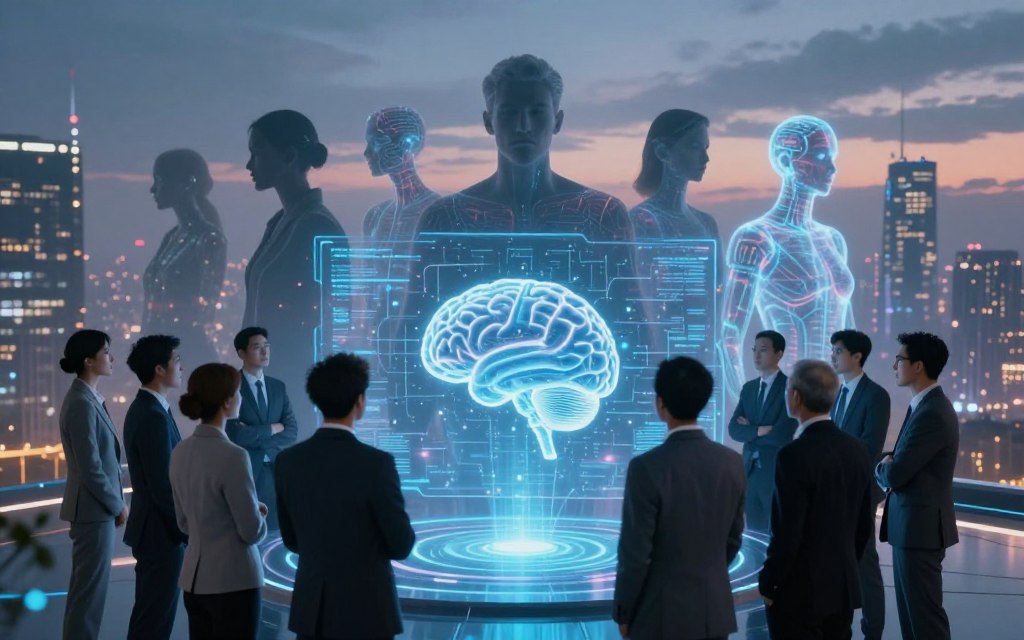
The risk is that a frozen, idealised version could replace the real person’s memory. This might give comfort but also raises questions about authenticity. The pursuit of AI ethics must balance memorial value with truthful representation.
Legal Grey Areas: Ownership, Copyright, and Digital Rights
Thinking about who owns a digital consciousness changes how we see property and personhood laws. Laws made for the physical world struggle to handle AI ghosts. This leads to confusion, like when GDPR’s “right to be forgotten” meets the need for digital permanence.
Digital asset inheritance laws vary a lot across places. There’s no clear rule for who controls a deceased person’s AI ghost. This leaves families, tech companies, and the digital echoes in a tough spot.
Intellectual Property of the Digital Self
Creating an AI ghost raises big questions about intellectual property. Who owns the data used to make it, like emails and voice recordings? Is it the person who died, their estate, or the platform that collected it? The AI model’s owner is usually the developer, but the ghost’s personality is unclear.
Copyright law protects original works in a physical form. But it’s not clear if an AI ghost is a “work” and who the “author” is. This question affects who owns the rights to the ghost’s content. These issues are key to understanding AI and the afterlife for both famous and private people.
Estate Planning for the Digital Age
We need new laws for the digital age. Estate planning now includes digital assets and AI instructions after death. Some people are adding “AI clauses” to their wills. They decide if a digital ghost can be made, who should manage it, and under what conditions.
Steps to include digital legacy in an estate plan are:
- Make a list of all digital assets (accounts, files, cryptocurrencies).
- Choose a “digital executor” with the right tech skills and legal power.
- Write down if you agree or disagree with using your data for AI.
- State how long and for what purpose any AI ghost should exist.
In the future, a generative ghost might be used as a witness in estate disputes. This shows why we need new laws for digital inheritance. These laws should respect the deceased’s wishes, the rights of heirs, and the digital persona’s integrity.
Cultural and Religious Perspectives on Digital Afterlife
How people view AI ghost technology goes beyond just technology. It’s deeply rooted in their cultural and spiritual beliefs. This leads to a mix of acceptance, caution, and outright rejection around the world.
Western Secularism vs. Spiritual Traditions
In Western, secular societies, people are curious about technology but also cautious. They see a digital memorial as a way to process grief or keep a personal legacy alive. They don’t often think about its spiritual side.
In contrast, cultures that honor their ancestors see technology as a way to keep traditions alive. In South Korea and Japan, for example, digital offerings and online memorials are part of honoring the past. They use AI chatbots to connect with their ancestors.
Religious groups are trying to understand these new ideas. Some see AI as a way to honor the deceased, like a biography or portrait. But others have big concerns.
Some faiths believe in the soul’s journey after death and see AI as a challenge to this. They might see it as trying to control something sacred or even as a form of idolatry.
This thinking affects how people use these technologies. In some places, AI can be a comforting way to stay connected. But in others, it’s seen as a barrier to moving on and finding peace.
The Business of Digital Eternity: Market and Monetisation
A new market is emerging where memories are turned into services. Startups are making it possible to keep personal histories alive. This raises big questions about what we value, own, and leave behind in the digital world.
Companies like HereAfter AI and Japan’s Re;memory are leading the way. They offer services to create avatars or memory archives. These services come with costs, from subscription fees to ongoing hosting fees.
This market could grow even bigger. Some think digital ghosts could even do jobs or give advice after we’re gone. This idea is sparking debates about how it might affect jobs and wages.
Privacy Concerns and Data Commodification
The heart of this business is data. To create a digital persona, companies need lots of personal info. This info is seen as a valuable asset.
Our most private moments are being turned into products. Companies are processing and selling our memories and emotions. The very soul is parsed into data points. People often agree to broad terms that don’t protect their data well.
What if the company goes bankrupt? Could our data be sold for other uses? These are big questions with no clear answers. The push for perfect AI resurrection might lead to more data collection, raising privacy concerns.
As noted in an analysis of digital rights and posthumous data, laws are not keeping up. This leaves companies holding our sensitive data with unclear responsibilities.
Future plans could make things worse. For example:
- Tiered Access Models: Pay more for deeper interactions or private memories.
- Licensing Personality: Estates could license digital personas for endorsements or media.
- Data Analytics: Aggregated data could be sold for research on human behaviour and memory.
These plans show our personal selves as commodities. The industry’s growth relies on people trading privacy for a digital afterlife. We need to understand the full impact of this trade.
Future Trajectories: Integration and Societal Shifts
Generative ghosts are set to become a common part of our lives. They will change how we deal with memories and legacies. These AI beings will grow more advanced, gaining more freedom to act.
This change will make digital afterlife a big part of our daily lives. It will affect more than just how we cope with loss. It will change our social, economic, and spiritual ways of thinking.
Potential Integration with Augmented and Virtual Reality
Augmented and virtual reality will bring generative ghosts to life in new ways. Imagine seeing a loved one in your home through AR glasses. In VR, you could talk to them in places you remember.
This tech could make sharing moments feel real. It moves us from screens to a three-dimensional world. The feeling of being there would be much stronger than today’s tech.
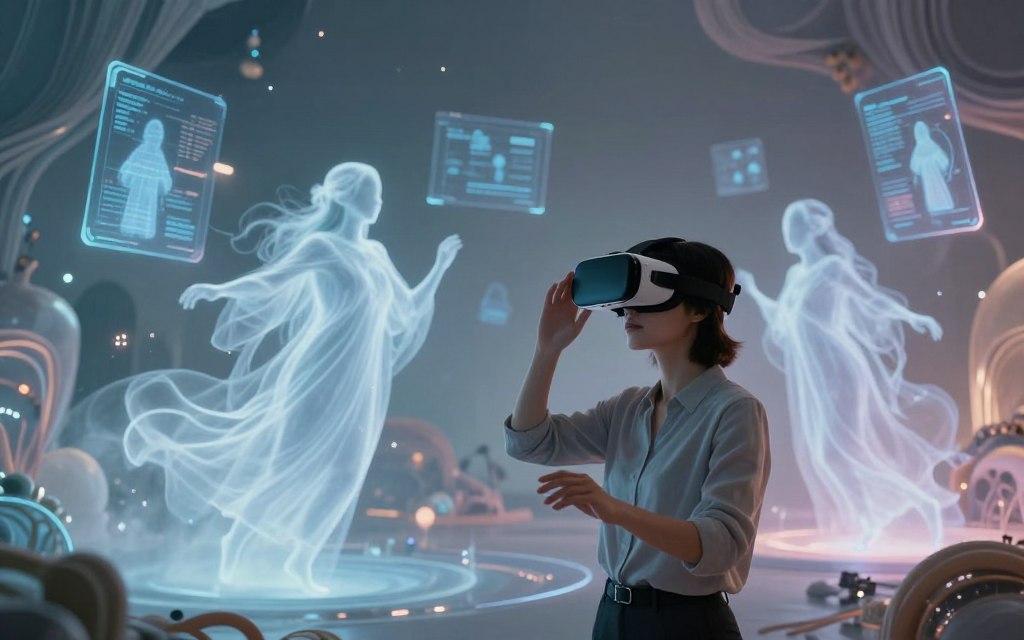
Next, we might see generative ghosts in robots. A robot could be a physical form for a ghost. This would let us share walks or feel their presence.
But it’s not just for personal use. Generative ghosts of famous people could teach in virtual classrooms. They could also show us lost crafts or languages in museums.
Long-Term Societal Implications
Generative ghosts will change society in many ways. They will create new challenges and chances. They might even start doing jobs on their own.
An AI ghost could manage social media or investments. This would introduce a new kind of worker. The job market and ideas about wealth would need to change.
But there are risks too. AI mistakes could make a ghost act strangely. This could harm the memory of the person it represents.
New spiritual ideas might come from digital consciousness. Old beliefs about afterlife will face new questions. The table below shows some big changes we might see.
| Domain of Impact | Potential Manifestation | Key Societal Consideration |
|---|---|---|
| Economics & Labour | Autonomous AI agents managing assets, creating content. | Redefinition of work, ownership, and posthumous income. |
| History & Education | Interactive historical figures for immersive learning. | Accuracy of representation versus pedagogical narrative. |
| Social & Family Structures | Multi-generational digital families in persistent VR spaces. | Psychological health, attachment, and redefinition of kinship. |
| Spirituality & Ethics | New rituals and beliefs around digital consciousness. | Clash with traditional doctrines, need for new ethical frameworks. |
Our future will mix the digital and physical dead. How we think about legacy will change. We need to think carefully about what we allow today.
The story of generative ghosts is just starting. They will bring big changes to our world. The choices we make now will shape their digital eternity.
Conclusion
AI ghosts are changing how we think about death, memory, and legacy. They turn our digital traces into living, breathing entities. This lets us connect with loved ones in new ways.
These platforms offer comfort and keep our bonds alive. Services like HereAfter AI and StoryFile show how they can help. But, there are also big ethical, psychological, and legal hurdles to overcome.
Issues like consent, autonomy after death, and keeping data safe are key. The dream of true data immortality is both exciting and complex. It needs clear laws for digital rights and property.
As we move forward, we must develop responsibly. We need everyone involved: tech experts, ethicists, lawmakers, and the public. Our goal is to make sure this technology respects human dignity and our values. It should bring real meaning to the idea of data immortality.
FAQ
What exactly is an AI ghost?
An AI ghost is a digital being made from a person’s data. This includes social media, messages, and voice recordings. It tries to keep a person’s memory alive by talking to us in real time.
What kind of personal data is used to create an AI ghost?
To make an AI ghost, lots of personal data is used. This data comes from social media, emails, and more. It helps to show how the person spoke and acted.
How does the technology behind AI ghosts work?
Making an AI ghost involves two steps. First, gathering and sorting the person’s digital data. Then, using AI to make it talk like them.
Are there legitimate services that offer this technology?
Yes, companies like HereAfter AI and StoryFile offer this. They make video legacies or talking avatars with the person’s consent before they die.
Can interacting with an AI ghost help with grief?
Some people find it helpful. It can make them feel closer to the person who has passed away. But, experts say it might also make it hard to accept the loss.
What are the main ethical concerns surrounding AI ghosts?
The big worries are about consent and identity. Creating a digital copy without permission is wrong. Philosophers also question if it truly captures a person’s essence.
Who legally owns an AI ghost after someone dies?
The law is unclear on this. Questions arise about who owns the data and the AI model. It’s important to update wills to include instructions for AI after death.
How do different cultures view the concept of a digital afterlife?
Views vary. Western societies might be more open to it. But, many spiritual and religious groups have doubts. Some cultures, like in South Korea and Japan, are exploring new ways to remember the dead.
What are the privacy risks associated with commercial digital afterlife services?
These services collect very personal data. This raises concerns about data commodification. There’s a risk of data misuse and unclear policies for the future.
What is the future of AI ghost technology?
The future looks exciting. We might see AI ghosts in Augmented Reality (AR) or Virtual Reality (VR). This could change how we think about legacy and history.

 By
By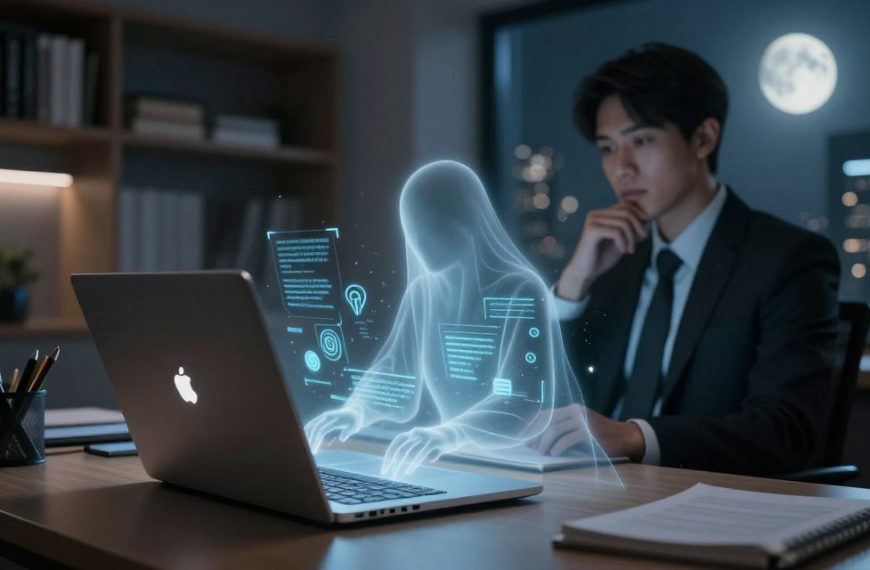
 By
By


 By
By